Agree the inputs
A named technical owner, agreed workload sample, infrastructure inventory, billing extracts and security constraints. Start after scope and required access are accepted; missing inputs move the schedule.
We reduce cutover risk through dependency mapping, a governed landing zone, rehearsed runbooks, validation and a tested rollback path — then stabilise the operating model after go-live.
Landing zone · cutover/rollback · VMware workloads · FinOps · run
A decision and delivery package that technical, security, finance and operations owners can review before the first production wave.
The GCP Architecture & Cost Assessment gives technical and financial owners one evidence-backed plan before committing to a migration or platform programme.
Workloads, dependencies, security requirements, operating model and current infrastructure spend.
Landing zone, IAM, networking, resilience, observability and service choices mapped to your constraints.
Cost model, material assumptions, optimisation opportunities and guardrails for budget owners.
Prioritised backlog, risks, owners, migration waves and a go, no-go or pilot recommendation.
Companies with a real migration, cost, governance or platform decision and access to a technical owner. Not a fit for teams seeking a generic cloud presentation or an unscoped estimate.
A defined first engagement
A named technical owner, agreed workload sample, infrastructure inventory, billing extracts and security constraints. Start after scope and required access are accepted; missing inputs move the schedule.
Review the architecture diagram, dependency map, cost workbook with assumptions, risk register and 90-day plan together. The recommendation may be keep, move, modernise or pilot.
This assessment does not migrate production, implement a full landing zone, certify compliance or guarantee savings. A broader discovery or implementation programme is scoped separately.
The assessment fee is fixed after scope confirmation, not automatically the price of a Landing Zone Sprint. The wider migration discovery described below is a separate phase. No new cloud subscriptions or production changes without approval.
Review our public client evidence. Infrastructure and workflow reviews are not proof of an identical GCP migration.
A controlled migration is built on explicit dependencies, test evidence, acceptance criteria and an owned fallback — not a blanket promise of zero downtime.
Primary scenario is VMware license pressure? Open dedicated VMware exit strategy →
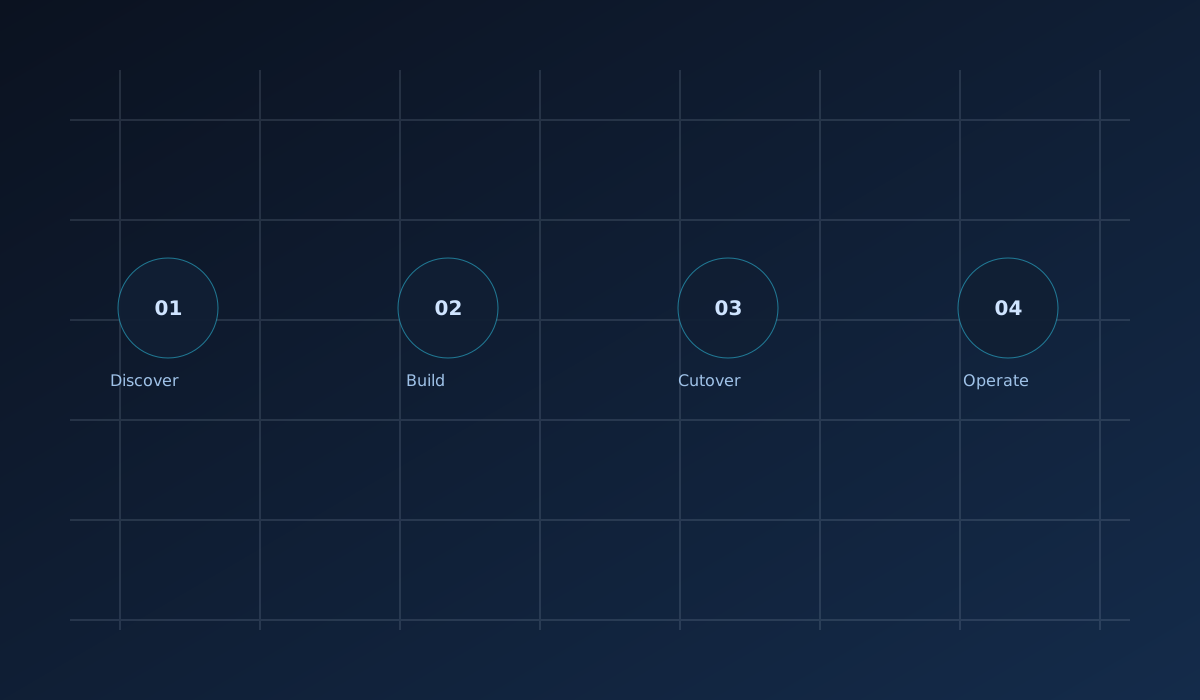
Each phase has clear outputs so both executives and engineering teams know what to expect.
Joint workshop, workload assessment, prioritisation, cost model and pilot scoping.
Secure GCP landing zone, IaC, CI/CD pipelines, observability and testing environments.
Detailed runbook, migration tooling, fallback scenario and a cutover executed against agreed acceptance criteria.
FinOps governance, executive reporting, knowledge transfer and optional 24/7 support.
Key questions teams ask before starting.
The discovery phase typically takes 3 weeks. You receive a business case, risk register, migration sequence and reference architecture.
We combine Terraform/IaC, migration tooling, rehearsed runbooks, data and service validation, and a tested fallback. The acceptable outage window and recovery criteria are agreed per workload; we do not make a blanket zero-downtime guarantee.
Google Cloud (GCE, GKE, Cloud SQL, BigQuery), security services, Terraform, GitLab CI, ArgoCD, observability stacks (Grafana, Ops Agent) and FinOps platforms.
Book a 30-minute session. We will map the current state, identify the highest-risk assumptions and outline a controlled migration path.